

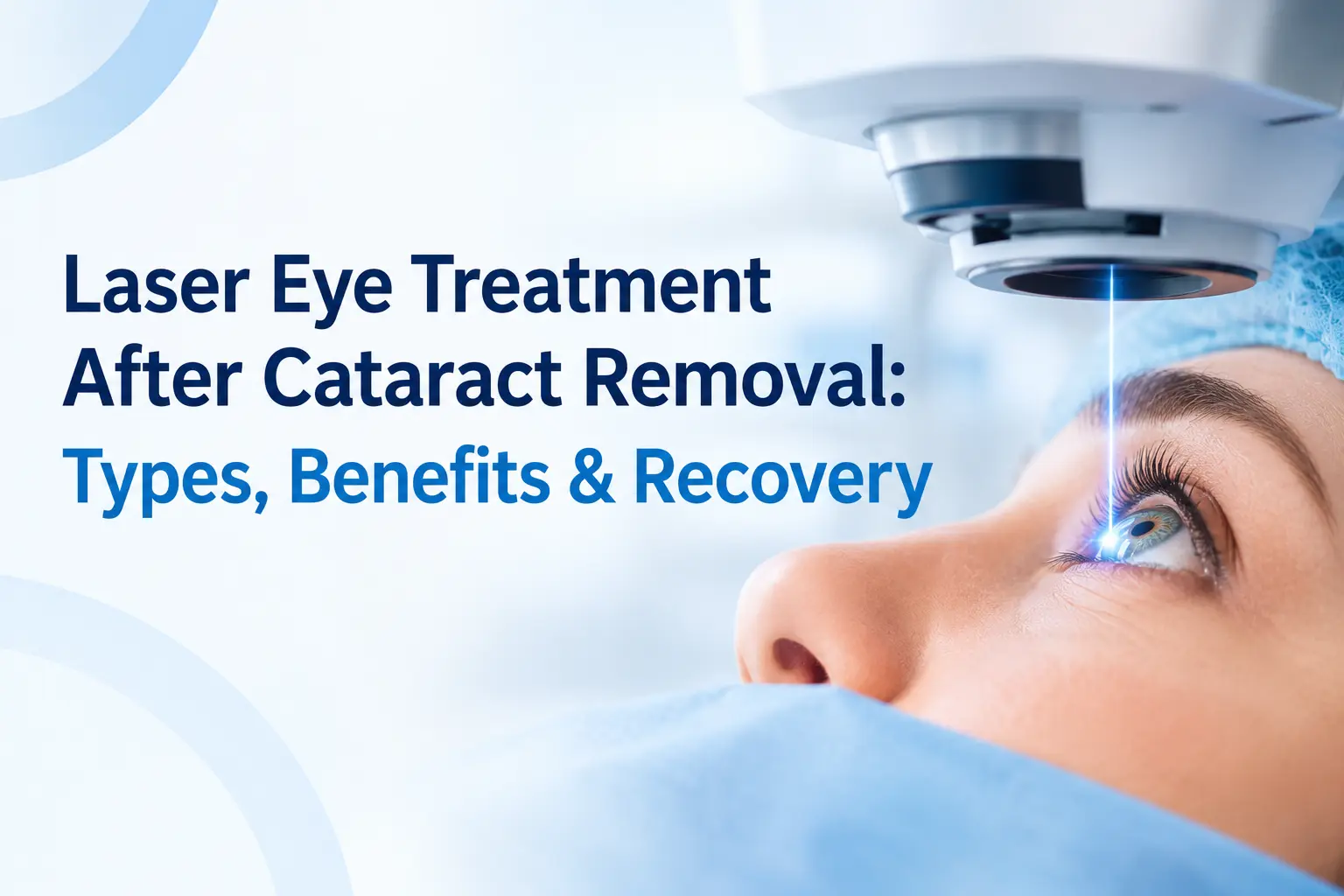
Cataract surgery usually brings clearer vision, so it can be worrying when the eyesight turns hazy again or glasses are still needed. This does not mean the surgery failed. In most cases, a short laser procedure can fix the problem.
LASER TREATMENT AFTER CATARACT SURGERY is generally used for two reasons: a clouded membrane behind the new lens, or a small leftover glasses power. This guide explains the types of laser, their benefits, what recovery looks like and when to see an eye specialist.
Why Is LASER SURGERY AFTER CATARACT REMOVAL Needed?
During cataract surgery, the natural lens is replaced with an artificial intraocular lens (IOL). Two issues can still affect vision later.
Cloudy Vision After Cataract Surgery
CLOUDY VISION AFTER CATARACT SURGERY is most often caused by posterior capsule opacification (PCO), also called a secondary cataract. The thin membrane that holds the new lens can thicken and cloud over, causing blurred vision and glare in bright light or at night.
PCO can appear from about three months to several years after surgery, and it is most common after two years or more. It does not damage the eye, but it can look like the cataract has come back.
Leftover Glasses Power
Cataract surgery does not change the cornea, which does much of the eye’s focusing. Mild nearsightedness, farsightedness or astigmatism can remain if the lens settles differently than planned or healing varies from person to person.
Types of LASER TREATMENT AFTER CATARACT SURGERY
The right laser depends on the cause of the problem. Do not confuse these with LASER CATARACT SURGERY, which means using a laser during the original operation. The treatments below are done afterwards.
YAG LASER CAPSULOTOMY
YAG LASER CAPSULOTOMY is the standard treatment for PCO and is considered the only effective way to clear it. The YAG LASER creates a small opening in the cloudy capsule so light can reach the retina again.
LASIK EYE SURGERY Enhancement
LASIK EYE SURGERY can fine-tune leftover glasses power. A thin corneal flap is lifted, the tissue underneath is reshaped, and the flap is repositioned. It needs a healthy, sufficiently thick cornea.
PRK Enhancement
PRK reshapes the surface of the cornea without a flap. It may suit thinner corneas or mild surface problems, but healing takes a few days longer than LASIK.
Benefits of LASER EYE SURGERY After Cataract Removal
- Restores clear vision when PCO is the cause. Research cited by the Cleveland Clinic shows that most patients, between 83% and 96%, have improved sight.
- Quick outpatient procedures, with most patients going home straight away.
- Sharper distance, intermediate and near vision after enhancement.
- Less dependence on glasses or contact lenses, though reading glasses may still be needed for some tasks.
- Better balance between the two eyes and fewer glare and halo effects.
What Happens During YAG LASER CAPSULOTOMY?
- Eye drops are used to numb the eye and widen the pupil.
- You sit at the laser machine, rest your chin and keep your eye still.
- A special lens may be placed on the numbed eye to help focus the laser.
- The laser fires painless pulses, and you may hear clicking or see bright light.
The laser steps take under ten minutes, though the whole visit can last up to two hours. The procedure is usually painless.
CATARACT SURGERY RECOVERY and Laser Aftercare
After YAG Laser
Your vision may be dazzled at first and usually returns within 5 to 10 minutes, but it can stay blurred for 4 to 6 hours. Do not drive on the day of treatment, so arrange for someone to take you home. Most people can drive the next day and have no activity restrictions.
Floaters often increase for a few days. Some patients receive anti-inflammatory drops for one to two weeks. Follow-up is usually at your next routine eye check-up unless your doctor advises an earlier visit.
After LASIK or PRK Enhancement
Surgeons usually advise waiting at least three to six months after cataract surgery so that the prescription, cornea and lens position can stabilise. Vision often improves within hours to a few days, and many people return to normal activities the next day. PRK takes a few days longer to heal. Lubricating and prescribed drops are used as directed, and temporary dryness or night glare can occur.
Risks and Warning Signs
Serious complications are uncommon. The most common effect of YAG laser is a temporary increase in floaters. Less often, there can be mild inflammation, a temporary rise in eye pressure, fluid at the central retina (macular oedema) or, rarely, a retinal tear or detachment. After LASIK or PRK enhancement, temporary dryness, halos and glare can occur.
Seek urgent medical help for any of these signs:
- Flashes of light
- A sudden, large increase in floaters
- A dark curtain or blank patch in your vision
- Sudden loss of vision
Who May Not Be Suitable for Enhancement?
Enhancement is not usually advised with uncontrolled dry eye, keratoconus, irregular astigmatism, corneal scarring, an unstable prescription or retinal problems. Alternatives include glasses, contact lenses or a lens-based procedure.
LASER TREATMENT AFTER CATARACT SURGERY IN LUCKNOW
If your vision has become cloudy after surgery, an examination by an EYE SPECIALIST IN LUCKNOW can confirm whether PCO or a leftover prescription is responsible. A good EYE HOSPITAL IN LUCKNOW will explain which laser is suitable, why it is needed and what to expect.
You can book a check-up at CHANDRA EYE HOSPITAL or another trusted eye hospital and ask about the benefits, risks, expected recovery and the cost of the procedure before treatment.
Frequently Asked Questions
Q1. Why do I need laser treatment after cataract surgery?
Laser is needed when the capsule behind the lens becomes cloudy, or when a small glass powers remains after surgery.
Q2. What is YAG laser capsulotomy?
It is a quick laser procedure that makes a small opening in the clouded capsule behind the lens so that light can pass through again.
Q3. Is YAG laser painful?
It is usually painless. Numbing drops are used, and you may feel slight pressure or hear clicking.
Q4. How long does the procedure take?
The laser steps take under ten minutes, although the whole visit, including drops and checks, can take up to two hours.
Q5. Can I drive after YAG laser?
Not on the day of treatment, because vision can stay blurred for several hours. Most people can drive the next day.
Q6. How soon after cataract surgery can cloudy vision appear?
Cloudiness from PCO can appear from about three months to several years after surgery, and it is most common after two years or more.
Q7. Can I have LASIK after cataract surgery?
Often yes, if the eye has healed, the prescription is stable and the cornea is healthy. Your surgeon will decide after an examination.
Q8. When can enhancement be done?
Surgeons usually advise waiting at least three to six months so the eye and the prescription can stabilise.
Q9. What are the risks of laser after cataract surgery?
Temporary floaters are most common. Rare risks include inflammation, raised eye pressure, macular oedema and retinal detachment.
Q10. Which doctor should I see in Lucknow?
Visit an experienced eye specialist at a trusted eye hospital in Lucknow for an examination and a clear explanation of your options.