

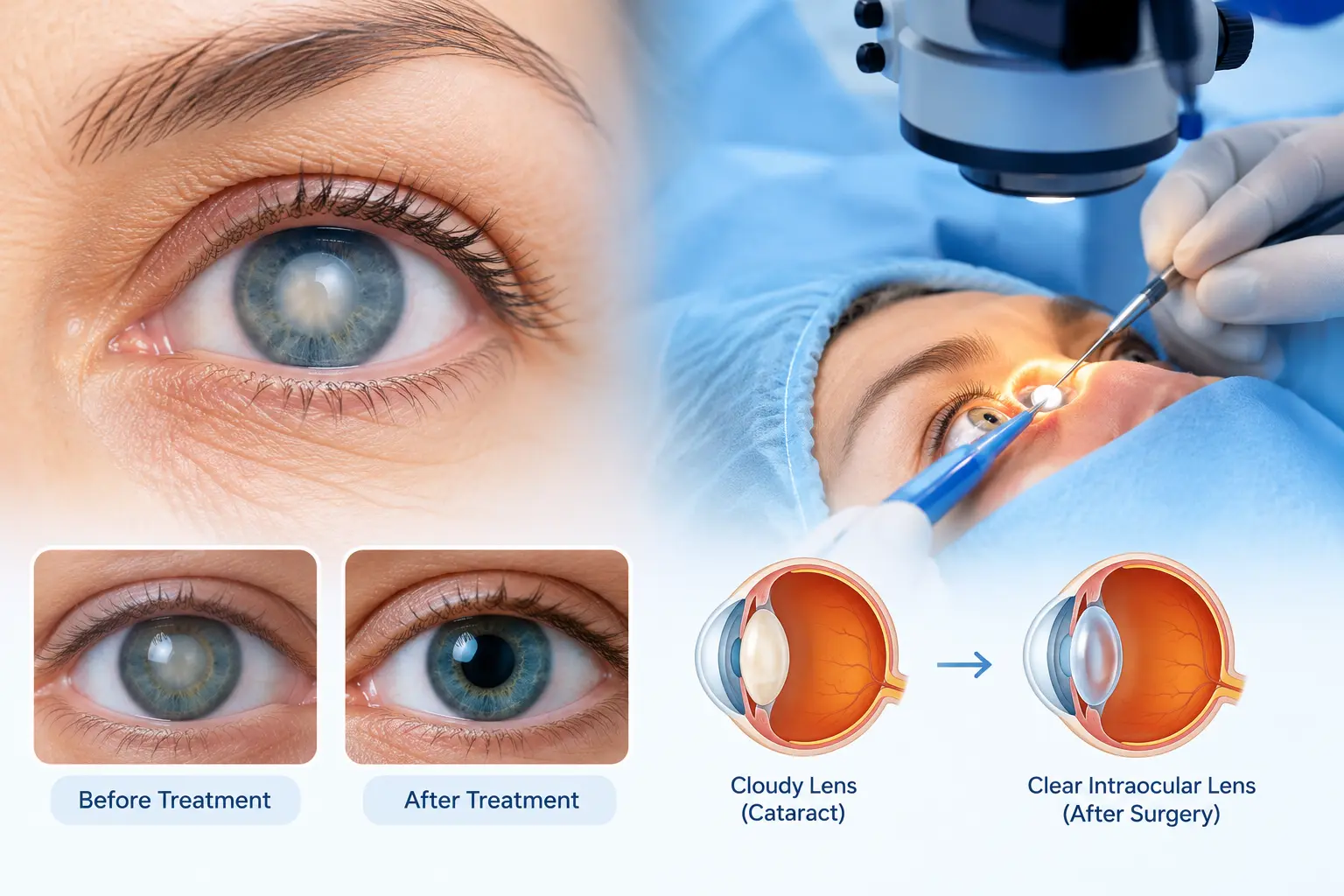
Cataracts are one of the most common age-related eye conditions, yet many people put off seeking help because they are unsure what to expect. The good news is that cataract treatments are among the safest and most successful procedures in modern medicine. This guide walks through diagnosis, treatment decisions, lens choices, and recovery in plain language.
What Is Cataract Formation and How Does It Affect the Cataract Eye?
Cataract formation begins when the proteins inside the eye’s natural lens slowly break down and clump together. The lens, which should be clear like a window, gradually turns cloudy. This happens mostly with age, but diabetes, long-term steroid use, eye injury, smoking, and heavy sun exposure can speed it up. In a cataract eye, light no longer passes cleanly to the retina. Vision becomes blurry, colors look faded or yellowed, and glare from headlights or sunlight becomes more bothersome.
Cataracts usually develop slowly in both eyes, though one eye is often worse than the other. Since the change is gradual, many people adapt without realizing how much their vision has declined.
Cataract Diagnosis: What Does an Eye Specialist Check?
A cataract diagnosis starts with a conversation about your symptoms and daily struggles, such as difficulty reading, driving at night, or recognizing faces. Your specialist then examines the eye closely to see how cloudy the lens is, whether other conditions are involved, and how much the cataract is really affecting your sight. Getting this picture right matters, because blurry vision can also come from glaucoma, macular degeneration, or diabetic eye disease, and these may need separate care.
The Vision Changes That Can Lead to a Cataract Diagnosis
Most people seek an exam after noticing foggy or dim vision, halos around lights, or trouble seeing in low light. Others find that their glasses prescription keeps changing, or that colors seem dull. Double vision in one eye and increased sensitivity to glare are also common clues. Because these signs overlap with other eye problems, a professional exam is the only reliable way to know the cause.
Tests Used to Confirm Cataracts and Assess Eye Health
Common tests include a visual acuity chart, a slit-lamp exam to inspect the lens, and a dilated retinal exam to check the back of the eye. Your specialist may measure eye pressure to rule out glaucoma and test glare sensitivity. If surgery is likely, detailed scans such as biometry and corneal topography measure the eye’s shape and length, which helps plan the right lens.
Cataract Treatments: How Doctors Decide the Right Approach
There is no medicine or eye drop that reliably clears a cataract once it has formed. Treatment depends on how much the cataract interferes with your life, not simply on how it looks during an exam. Doctors consider your daily activities, work, driving needs, other eye conditions, and overall health. Two people with similar-looking cataracts may need very different cataract treatments, because one may struggle with night driving while the other barely notices a change. The decision is shared: your specialist explains the options, and you weigh them against your lifestyle. Early cataracts are often managed with stronger lighting, anti-glare lenses, and updated glasses, while advanced cataracts that limit independence usually call for surgery. Either way, regular follow-up helps track any changes.
When Monitoring a Cataract May Still Be Appropriate
If your vision is still functional and the cataract is not affecting safety or daily tasks, monitoring is often reasonable. Your specialist may suggest regular check-ups, updated glasses, brighter reading lights, and anti-glare coatings. Surgery is not urgent in these cases, and waiting does not usually harm the eye. The key is to report any new changes promptly so the plan can be adjusted.
When Surgery Becomes the Treatment of Cataract
Surgery becomes the main treatment of cataract when vision loss disrupts driving, reading, work, or independence, or when the cataract interferes with managing another eye condition. During the procedure, the cloudy lens is removed and replaced with a clear artificial lens, called an intraocular lens (IOL). It is usually quick, done under local anesthesia, and most people go home the same day.
Choosing the Right Lens During Cataract Surgery
What Makes a Toric Lens Different?
A toric lens has different powers in different directions, allowing it to correct astigmatism, which is caused by a cornea shaped more like a rugby ball than a round ball. By correcting this at the time of cataract surgery, many patients can see clearly at a distance with less reliance on glasses. The lens must be positioned at a precise angle, which is why planning is so detailed.
Problems With Toric Lenses for Cataract Surgery: What Patients Should Know
The most discussed problem with toric lenses for cataract surgery is rotation. If the lens turns even slightly from its intended position, astigmatism correction weakens and vision can stay blurry. Other concerns include residual astigmatism, glare, dry eye affecting measurements, and extra cost, since toric lenses are often not fully covered. Rotation may sometimes need a small repositioning procedure. These issues are not common, but knowing them in advance helps you decide.
Who May and May Not Benefit From a Toric Lens
People with regular, moderate to significant astigmatism and healthy eyes often benefit most. A toric lens may be less suitable if you have an irregular cornea, keratoconus, significant dry eye, corneal scarring, or certain retinal or glaucoma conditions that limit visual potential. Very mild astigmatism may also be handled with other methods. Your specialist can tell you whether the benefit outweighs the risks.
Why Accurate Measurements Matter Before Toric Lens Selection
A toric lens only works as well as the measurements behind it. Precise readings of corneal curvature, axis, and eye length determine both lens power and placement angle. Dry eye, contact lens wear, or an uneven tear film can distort these readings, so treating the eye surface first is often advised. Surgeons may repeat measurements and use marking or guidance technology during surgery to improve accuracy.
Dark Glasses After Cataract Surgery: When and Why Are They Recommended?
Many surgeons recommend dark glasses after cataract surgery because the eye is temporarily sensitive to light and glare, especially in the first few days. Pupils may stay dilated, and clear new vision can feel overly bright. Sunglasses protect the eye from sunlight, dust, wind, and accidental rubbing. They are most useful outdoors, but some patients also find them comfortable indoors under bright lighting. Your surgeon may also give you a clear plastic shield to wear at night. How long you need them varies, but most people wear sunglasses for about one to two weeks, or until light sensitivity eases. Long-term, UV-protective sunglasses remain a smart habit, since sun exposure contributes to eye damage over time. Always follow your own surgeon’s instructions.
What Can You Expect After Cataract Surgery?
Most people notice improved vision within a day or two, though it may be blurry or hazy at first. Mild itching, grittiness, or watering is normal. You will use prescription eye drops for a few weeks to prevent infection and control inflammation. Avoid rubbing your eye, heavy lifting, swimming, and dusty environments until your surgeon clears you. Vision typically stabilizes within several weeks, after which you may need a new glasses prescription. Call your surgeon promptly if you notice worsening pain, sudden vision loss, increasing redness, or flashes and floaters.
Can Cataracts Come Back After Treatment?
The cataract itself cannot return, because the natural lens is removed. However, some people develop posterior capsule opacification, sometimes called a “secondary cataract,” months or years later. The thin membrane that held the lens becomes cloudy, causing blurry vision again. It is easily treated with a quick, painless laser procedure that takes only minutes.
When Should You Discuss Cataract Treatment With an Eye Specialist?
Consider booking a consultation at Chandra Super Speciality Eye Hospital in Lucknow and if an eye specialist if blurry vision, glare, or poor night vision is making daily life harder, or if your glasses no longer seem to help. Our specialists can help you understand the available options for oculoplastic treatment in Lucknow and determine whether surgery may be appropriate for your needs.
Early consultation with a qualified oculoplastic specialist can help you make an informed decision about your eye health and treatment options. Early advice does not commit you to surgery, but it gives you a clear plan and the chance to choose the right lens with confidence.