

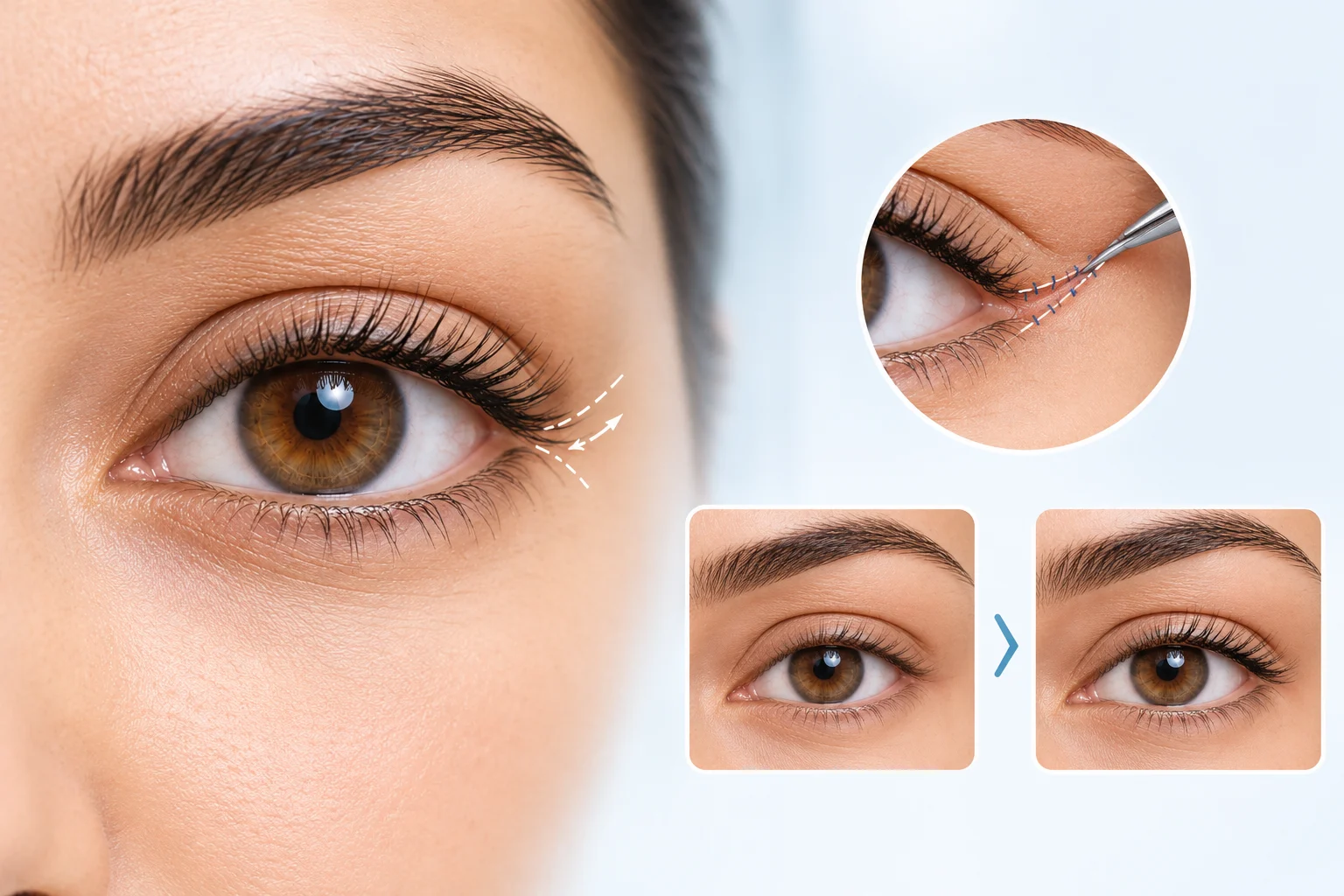
What Is Canthoplasty and What Does the Surgery Change?
Canthoplasty is a surgical procedure that alters the position or shape of the outer corner of the eye. Its primary objective may be to modify the eye’s appearance or, in some cases, to correct eyelid-related issues. It is important to note that this procedure is not suitable for everyone, and the results depend on factors such as the eye’s anatomy, the surgical technique used, and individual needs.
Additionally, it is crucial to be well-informed about potential risks and the recovery process. Consult a qualified ophthalmologist or plastic surgeon before making any decisions. The purpose of this health information is to raise patient awareness, not to promote any specific procedure.
Additional information about Canthoplasty and Lateral Canthoplasty
One type of this procedure is lateral canthoplasty, which involves modifying the tissues and supporting structures at the outer corner of the eye as needed. In addition to altering the eye’s appearance, this procedure can also be performed to correct issues related to eyelid positioning in certain cases.
It is important to pay special attention to certain factors before undergoing lateral canthoplasty; prior to the surgery, the doctor assesses the eye structure, eyelid position, eye health, and the patient’s specific needs. Post-surgery, complications such as swelling, discomfort, scarring, asymmetry in eye shape, or other issues may occur. Recovery time varies depending on the individual and the surgical technique used.
Consulting a qualified ophthalmologist or an experienced plastic surgeon is essential before deciding to undergo canthoplasty. Understanding the potential benefits, risks, alternatives, and recovery instructions helps the patient make an informed decision.
Why the Right Canthoplasty Approach Is Different for Every Patient
Canthoplasty is Basically a surgical procedure that alters the position of the outer corners of the eyes and the eyelids. The specific technique employed depends on the patient’s eye structure, the support available to the lower eyelid and the objective of the surgery. Therefore, it is not advisable to choose a particular procedure simply based on the results seen in another person; it is crucial to determine the most appropriate canthoplasty method for each individual patient.
Eye Shape, Lower Eyelid Support, and Outer Eye Anatomy
Eye shape, lower eyelid support, and the structure of the outer corner vary from person to person. When considering Fox Eye surgery, a specialist thoroughly evaluates all these aspects. The stability of the lower eyelid and the condition of the surrounding tissues can influence the treatment options.
Furthermore, it is crucial to ensure that the appropriate procedure is selected by carefully considering individual needs, eye health, and potential risks.
Cosmetic Goals vs Functional Eye Concerns
As previously mentioned, canthoplasty is a surgical procedure used to alter the position or shape of the eye’s outer corner. Patients may consider this procedure for various reasons. Some seek changes to the eye’s appearance, while others may face issues regarding the position or stability of the lower eyelid. It is crucial to understand the distinction between these two scenarios.
Cosmetic Goals and Eye Appearance
For those undergoing canthoplasty primarily for cosmetic reasons, the goal is often to change the shape or position of the eye’s outer corner. Lateral canthoplasty involves working on the supporting structures of the eye’s outer corner. However, the potential outcome depends on the eye’s natural anatomy, the condition of the tissues, and the specific surgical technique employed.
Functional Concerns and Eyelid Support
In some cases, this procedure may be considered to address issues related to the position or support of the lower eyelid. Doctors evaluate eye health and eyelid stability before recommending the most suitable option.
Canthoplasty: Before and After – What to Expect?
“Before and after” photos of canthoplasty (including lateral canthoplasty) can help visualize potential changes. However, these photos do not guarantee specific results for every patient. It is essential to consult a qualified specialist before surgery to understand the potential benefits, risks, and recovery process.
What Your Eye Specialist Checks Before Recommending Canthoplasty
Before recommending canthoplasty, an eye specialist examines the patient’s eye structure, the position of the lower eyelid and the tissues supporting the outer corner of the eye. The primary goal of this assessment is to determine the procedure’s suitability for the patient and the potential changes it may bring. The doctor also gathers information regarding the patient’s medical history, previous eye surgeries, injuries, or eyelid-related issues.
Stability of the outer eye corner and eyelid
The specialist assesses the position of the outer corner of the eye, as well as the laxity and support of the lower eyelid. Treatment options and potential risks are explained based on these factors. Since every patient’s needs differ, the surgical plan is tailored to the individual.
Canthoplasty Before and After: Understanding the results
“Before and after” photos of canthoplasty can help patients visualize the potential changes associated with the surgery. However, the results shown in photographs may not be identical for every individual.
Lateral Canthoplasty Before and After: What do you need to know?
When evaluating before and after photos of lateral canthoplasty, one must consider factors such as natural eye structure, camera angles, and the recovery period. A decision regarding surgery should not be based solely on photographs. It is crucial to obtain clear information about potential benefits, risks, and the recovery process from a qualified specialist.
Position of the Outer Eye Corner and Eyelid Laxity
Before a canthoplasty, the specialist assesses the position of the outer corner of the eye and the laxity of the lower eyelid. This helps determine whether the eyelid requires additional support. “Before and after” photos of lateral canthoplasty can provide an idea of potential changes, but actual results depend on the eye’s anatomy and the recovery process.
Skin, Tendon, and Lower Eyelid Stability
Before a canthoplasty, the specialist examines the skin around the eyes, the tendon supporting the outer corner, and the stability of the lower eyelid. The condition of these structures can significantly influence the surgical plan. A thorough assessment helps in gaining a deep understanding of potential risks and selecting the most appropriate treatment option for the patient.
Previous Eye Surgery, Trauma, or Eyelid Procedures
Before planning a canthoplasty, the specialist gathers information regarding any past eye surgeries, injuries, or eyelid-related procedures the patient has undergone. Previous surgeries on the eyes or eyelids can alter the structure of the outer corner, the condition of the tissues, and the support of the lower eyelid. Similarly, past injuries may have resulted in scarring or tissue tightness. Assessing these factors helps in formulating an appropriate treatment plan.
When viewing photos of Lateral canthoplasty before and after, it is crucial to understand that every patient’s initial condition and recovery process can vary. Previous surgeries or injuries can influence the outcome and the time required for recovery. Therefore, these photos should be viewed for general information only, rather than as a guarantee of individual results. Before undergoing surgery, discuss potential risks, the recovery process, expected changes, and available options with the specialist.
Lateral Canthoplasty: When Is This Approach Considered?
Canthoplasty is a surgical procedure used to alter the position of the eye’s outer corner and the surrounding supportive tissues. Lateral canthoplasty may be considered when there are issues regarding the shape of the outer corner of the eye, the stability of the lower eyelid, or the eyelid’s position following a previous surgery. In some cases, the primary goal is to alter the eye’s appearance, while in others, the focus is on providing better support to the eyelid.
This procedure is not suitable for everyone. Specialists provide recommendations after evaluating the eye structure, skin, tendons, medical history, and the patient’s expectations. Canthoplasty before and after photos can be very helpful in understanding the potential changes associated with the procedure, though they do not guarantee specific results for every patient.
It is essential to discuss potential risks, recovery time, and alternative treatments with a qualified eye specialist before undergoing surgery.
How Lateral Canthoplasty Can Alter Outer Eye Shape
Lateral canthoplasty allows for modifications to the position of the outer corner of the eye and its supporting tissues. This can influence the shape of the eye, the tilt of the outer corner, and the contour of the lower eyelid. However, the outcome depends on the individual’s natural eye structure and the surgical technique employed. “Before and after” photos of canthoplasty help visualize potential changes, though results vary from person to person.
Who May Not Be Suitable for This Approach
Lateral canthoplasty is not the right option for everyone. Individuals with active eye infections, severe eyelid instability, or health issues that could affect surgery and recovery should first undergo an evaluation by a specialist. A history of previous eye surgeries or injuries can also influence the decision. A qualified eye specialist provides appropriate advice after assessing the patient’s condition, expectations, and potential risks.
Canthoplasty Before and After: What Results Should Patients Expect?
Canthoplasty is often talked about online in dramatic terms, but the reality is more nuanced. Whether you are considering the procedure for comfort, function, or appearance, knowing what changes to expect, and when, helps you make a confident decision. This guide covers recovery, lateral canthoplasty, and the questions worth asking before you book.
Canthoplasty Before and After: What Results Should Patients Expect?
Canthoplasty is a surgical procedure that tightens or repositions the outer corner of the eyelids, where the upper and lower lids meet. Surgeons use it to correct a loose lower eyelid, support a drooping lid, or reshape the corner of the eye. When people search for canthoplasty before and after photos, they usually want to know how different they will look and how long it takes to get there. The honest answer is that results depend on why the surgery is done. Functional cases, such as a lower lid pulling away from the eye, often bring real relief from dryness, watering, and irritation.
Cosmetic cases tend to produce a subtle change in lid position and eye shape rather than a dramatic transformation. Most patients notice a firmer, better-supported lid line and eyes that look more open and balanced.
Early Swelling, Bruising, and Healing Changes
In the first few days, expect swelling, mild bruising, and tightness around the eyes. Your “after” look at this stage can be misleading, because the lids may sit higher or tighter than they eventually will. Cold compresses, head elevation, and prescribed eye drops or ointments usually help. Most bruising fades within one to two weeks, though swelling can linger longer. Many people return to light daily activities within about a week, but your surgeon will give you specific limits on exercise and eye rubbing. Healing is rarely perfectly even, so slight asymmetry early on is common and usually settles.
How Final Results Develop Over Time
Final canthoplasty results develop gradually over several months. Once swelling subsides, the lid position softens and the corner of the eye relaxes into a more natural shape. Scars at the outer corner typically mature and fade, often becoming hard to notice. Most surgeons review progress at set intervals, such as one week, one month, and three to six months. Judging your result too early is one of the most common mistakes patients make. Patience, sun protection, and following aftercare instructions all contribute to a smoother and more lasting outcome.
Lateral Canthoplasty Before and After: Understanding the Difference
Lateral canthoplasty focuses specifically on the lateral canthus, the outer corner of the eye, where the lids attach to the bone of the eye socket. The surgeon tightens or repositions the lateral canthal tendon to give the lower lid firmer support. In lateral canthoplasty before and after comparisons, the most visible change is usually at the outer corner, which may look slightly lifted, tighter, or more defined. Functionally, the lower lid sits closer to the eye surface, which can reduce watering, exposure, and the sagging or “scleral show” that appears when white shows below the iris.
The results are typically refined rather than dramatic, and they depend on your starting anatomy, tissue laxity, and the technique used.
Is Canthoplasty the Same as Fox Eye Surgery?
That cannot be said entirely. ‘Fox eye surgery’ is a well-known and highly popular non-medical term. Its primary aim is to give the eyes an upward-lifted, almond-shaped appearance, where the outer corners are positioned higher than the inner corners. While canthoplasty can be a key component of this procedure, the two terms cannot be used interchangeably.
Canthoplasty can also be performed for purely medical reasons, without any intention of altering the shape of the eyes.
Why “Fox Eye Surgery” Can Mean Different Procedures
The phrase is used loosely online. Depending on the clinic, it may refer to lateral canthoplasty, canthopexy, brow or lid lifts, thread lifts, or even non-surgical options. Each works differently, carries different risks, and offers different durability.
Because the label is a marketing term rather than a clinical one, it is wise to ask exactly which procedure is being proposed and what it involves.
How Your Specialist Determines the Appropriate Technique
A qualified specialist assesses your lid tension, bone structure, eye surface health and your goals. Simple tests of how quickly the lower lid snaps back, along with a review of past eye surgery, help guide the choice. Some patients need a tightening procedure, others a gentler repositioning. A good surgeon will also tell you when surgery isn’t the right option.
Questions to Ask Your Eye Specialist Before Canthoplasty
- Come to your consultation prepared. Useful questions that is include:
- – Which exact technique do you recommend for me, and why?
- – How many canthoplasties have you performed, and can I see typical results?
- – What are the risks, including asymmetry, dry eye, or the need for revision?
- – What does recovery look like week by week?
- – How long do results usually last?
When Should You Consider an Eye Specialist Consultation?
Consider booking a consultation at Chandra Super Speciality Eye Hospital in Lucknow if you experience persistent watering or dryness, a sagging or outward-turning lower eyelid, visible white below the iris, or wish to explore changes to your eye shape. Our specialists can help you understand the available options for oculoplastic treatment in Lucknow and determine whether surgery may be appropriate for your needs. Early consultation with a qualified oculoplastic specialist can help you make an informed decision about your eye health and treatment options.