

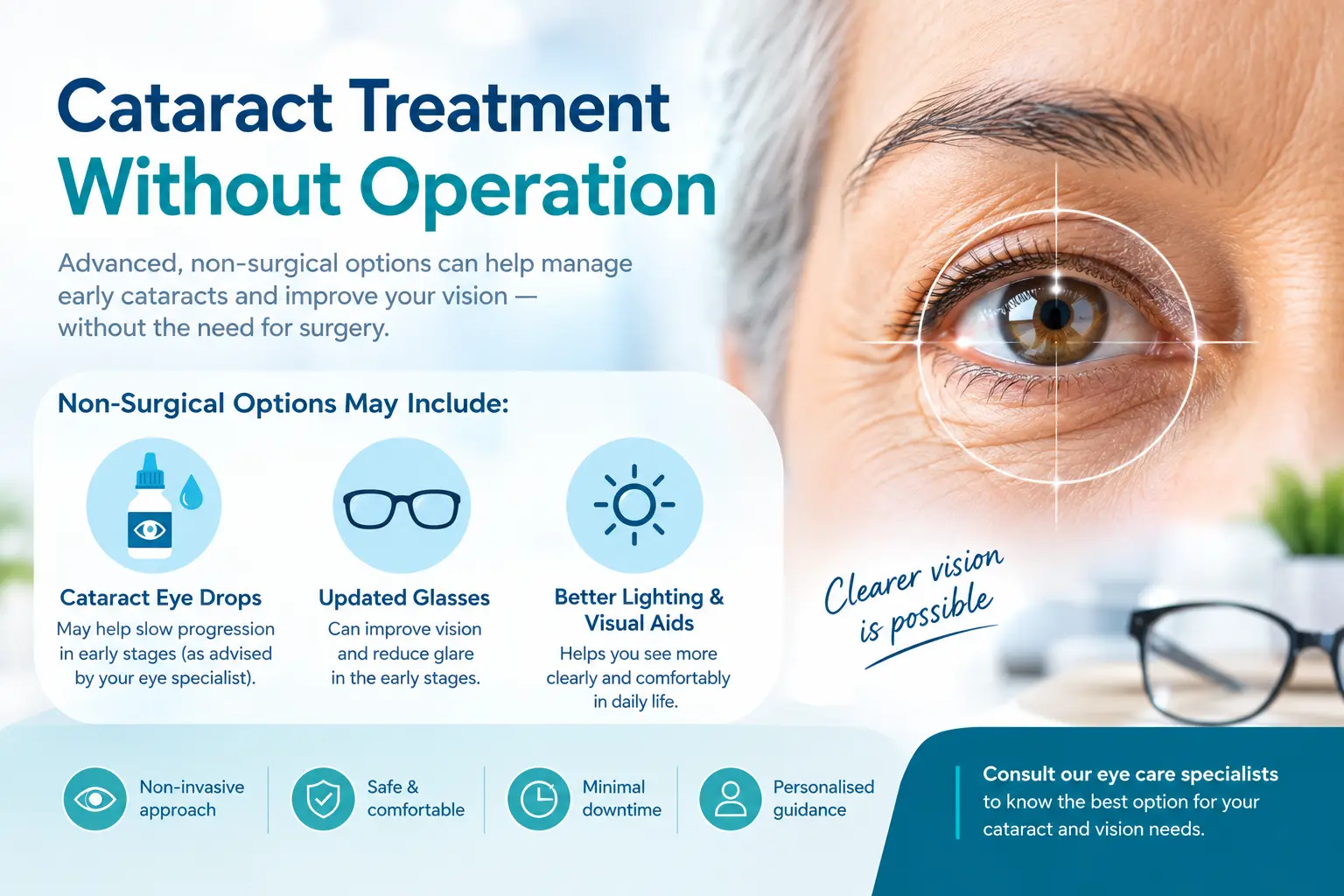
A cataract is a very common eye condition in which the eye’s natural lens becomes cloudy. This can lead to a gradual decline in vision, sensitivity to light, and difficulty in performing daily activities. Consequently, many patients wonder whether cataract treatment without surgery is possible specifically, whether eye drops or home remedies can cure the condition.
The straightforward answer is that, currently, there are no proven eye drops, medications, or home remedies that can completely eliminate a cataract or restore clarity to a cloudy natural lens. However, in the early stages, medical supervision, the use of appropriate eyeglasses, improved lighting, and regular check-ups can help manage daily tasks for a period of time. When a cataract begins to significantly impair vision, surgery remains the most effective treatment.
What Is a Cataract and Why Does It Occur?
The natural lens inside the eye helps focus light onto the retina. As a person ages, the proteins within this lens can undergo changes, causing the lens to become cloudy. This condition is known as a cataract.
While cataracts typically develop with age, other factors can also contribute to their formation. These include diabetes, eye injuries, long-term use of steroid medications, and certain other eye diseases. In some cases, children may also be born with cataracts (congenital cataracts). Key symptoms include blurred vision, difficulty seeing at night, glare or sensitivity to bright lights, seeing halos around light sources, and frequent changes in eyeglass prescriptions.
If such symptoms occur, it is essential to consult an eye specialist for a proper diagnosis and to discuss treatment options.
1. Aging: Advancing age is the most common cause of cataracts. Over time, the proteins within the eye’s lens begin to change, which can cause the lens to become cloudy.
2. Diabetes: People with diabetes may be at an increased risk of developing cataracts. Poorly controlled blood sugar levels over a long period can affect the lens of the eye.
3. Eye Injury: An injury to the eye or an accident can damage the lens. In some cases, a cataract may develop shortly after the injury or even much later.
4. Long-term Use of Medications: Prolonged use of certain medications, such as steroids, can increase the risk of developing cataracts. Such medications should not be discontinued without consulting a doctor.
5. Congenital Causes: Some children are born with cataracts. This can be linked to genetic factors, certain infections during pregnancy, or other underlying conditions.
6. Smoking and Ultraviolet (UV) Rays: Smoking and long-term exposure to ultraviolet (UV) rays from the sun have been linked to an increased risk of cataracts. Wearing sunglasses that provide UV protection can help safeguard the eyes.
Is it possible to treat cataracts without surgery?
Not every patient with an early-stage cataract requires immediate surgery. If vision is not significantly affecting daily activities, a doctor may recommend regular monitoring. While certain measures can help alleviate vision-related difficulties, they do not eliminate the cataract itself.
1. Correct Eyeglass Prescription: If a cataract has caused minor changes in vision, wearing glasses with the correct prescription can help improve sight for a period of time.
2. Adequate Lighting: Using good lighting while reading or performing close-up tasks can make it easier to see and recognize text.
3. Regular Eye Exams: Through routine check-ups, a doctor can assess the progression of the cataract and its impact on your vision.
4. Lifestyle Considerations: Maintaining a balanced diet, avoiding smoking, and managing conditions like diabetes are beneficial for overall eye health. However, these measures do not guarantee the reversal of an existing cataract.
Therefore, the goal of managing early-stage cataracts is to address vision-related needs and determine the appropriate timing for treatment, not to clear a clouded lens using medication.
Eye Drops for Cataracts: Can they cure cataracts?
Many patients search online for information regarding “eye drops for cataracts.” Some products on the market may claim to eliminate cataracts or help patients avoid surgery. However, at present, there are no proven eye drops available that can completely cure age-related cataracts.
Doctors may prescribe eye drops for conditions such as dry eyes, allergies, or other issues, as needed. These are intended for those specific problems not for clearing the cloudiness of a cataract-affected lens.
Avoid using eye drops without a specialist’s advice, especially those containing steroids as improper or prolonged use can cause damage to the eyes. If any product claims to cure cataracts without surgery, consult an ophthalmologist before believing such claims.
When is cataract surgery necessary?
The decision to undergo cataract surgery does not depend solely on the degree of cloudiness in the lens. Doctors also assess the extent to which vision impairment affects the patient’s daily life.
Surgery may be considered if a patient begins to experience difficulty with tasks such as reading, driving, recognizing faces, descending stairs, or performing other routine activities. In some cases, a doctor may also recommend surgery to facilitate the treatment of other existing eye conditions.
During cataract surgery, the cloudy natural lens is removed and replaced with an artificial intraocular lens (IOL). The specific surgical technique and the choice of lens depend on the condition of the patient’s eyes, their individual needs, and the specialist’s recommendations.
Modern techniques, such as phacoemulsification, are commonly used today. However, as no single procedure is suitable for every patient, a thorough examination and a detailed discussion with the doctor are essential prior to the operation.
How to Identify Early Symptoms of Cataracts?
In the early stages of a cataract, vision begins to decline gradually. Patients may experience symptoms such as blurred vision, difficulty seeing at night, and discomfort or a stinging sensation when exposed to bright light. Some individuals may also notice halos (rings of light) around light sources. If such symptoms appear, it is essential to undergo an eye examination to ensure timely and appropriate treatment.
How Are Cataracts Diagnosed?
Cataracts are diagnosed through a comprehensive eye examination performed by an ophthalmologist. The following tests help assess the condition of the eye’s natural lens and determine how much the cataract affects vision.
1. Visual Acuity Test
A visual acuity test measures how clearly a person can see letters, numbers, or symbols from a specific distance. It helps the doctor assess the level of vision impairment and determine whether a cataract may be affecting everyday activities.
2. Slit-Lamp Examination
A slit-lamp examination uses a specialized microscope and a focused beam of light to examine the structures at the front of the eye. It allows the doctor to identify cloudiness in the natural lens and assess the cataract’s location and severity.
3. Dilated Eye Examination
During this examination, the doctor uses eye drops to widen the pupils and examine the retina and optic nerve at the back of the eye. This helps identify other eye conditions that may contribute to vision problems or affect treatment outcomes.
4. Refraction Test
A refraction test checks whether changes in the eye’s focusing ability are contributing to blurred vision. It helps determine the appropriate eyeglass prescription and assess whether glasses can improve vision during the early stages of a cataract.
5. Intraocular Lens Measurement
If cataract surgery is being considered, the doctor may measure the length of the eye and the curvature of the cornea. These measurements help calculate the appropriate power of the artificial intraocular lens (IOL) that will replace the cloudy natural lens during surgery.
How to Manage Early-Stage Cataracts?
Taking certain precautions can make daily activities easier when dealing with early-stage cataracts. Ensure adequate lighting while reading, use prescription glasses with the correct power, and wear sunglasses with UV protection when outdoors. If you have diabetes, it is crucial to keep your blood sugar levels under control and undergo regular eye check-ups. It should be noted, however, that these measures do not eliminate the cataract; therefore, professional medical advice remains essential.
How to Choose the Right Eye Hospital in Lucknow?
When selecting an eye hospital in Lucknow for cataract treatment, consider the qualifications of the doctors, the facilities available at the hospital, and the range of diagnostic services offered. Additionally, inquire about which surgical procedure and type of intraocular lens (IOL) would be most appropriate for the patient’s specific eye condition. It is better to get clear information from the doctor about the possible benefits, risks, expenses and recovery before treatment.
Frequently Asked Questions
Q1. Can cataracts be treated without an operation?
Currently, there is no proven medicine, eye drop, or home remedy that can remove a cataract. Early-stage cataracts may be managed temporarily with glasses, better lighting, and regular eye examinations.
Q2. Can eye drops cure cataracts?
No, currently available eye drops cannot completely clear a cataract or restore the cloudy natural lens. Drops may be prescribed for other eye conditions, but they do not cure cataracts.
Q3. What are the early symptoms of cataracts?
Common symptoms include blurred vision, glare from bright lights, difficulty seeing at night, and halos around lights. Frequent changes in eyeglass prescriptions may also occur.
Q4. Is surgery necessary for every cataract patient?
No, surgery is not always required immediately. If the cataract does not significantly affect daily activities, an eye specialist may recommend regular monitoring.
Q5. Can glasses improve vision affected by cataracts?
The correct eyeglass prescription may improve vision temporarily, particularly during the early stages. However, glasses cannot remove the cataract or stop its progression.
Q6. When should cataract surgery be considered?
Surgery may be considered when cataracts interfere with reading, driving, recognizing faces, or other daily activities. The decision should be made after a comprehensive eye examination and discussion with an ophthalmologist.
Q7. What tests are used to diagnose cataracts?
An eye specialist may perform a visual acuity test, slit-lamp examination, and a retinal examination when needed. These tests help assess the cataract and identify other conditions that may affect vision.
Q8. Can lifestyle changes reverse cataracts?
Healthy habits, avoiding smoking, wearing UV-protective sunglasses, and managing diabetes support overall eye health. However, these measures cannot reverse an established cataract.
Q9. How do I choose an eye hospital in Lucknow for cataract treatment?
Look for qualified ophthalmologists, appropriate diagnostic facilities, transparent treatment costs, and clear explanations of surgical options. Ask about the available intraocular lenses, potential risks, and follow-up care.
Q10. Is cataract surgery safe?
Cataract surgery is a commonly performed procedure and is generally successful, but like any surgery, it carries potential risks. An eye specialist can explain the benefits, risks, and expected recovery based on the patient’s individual eye health.