

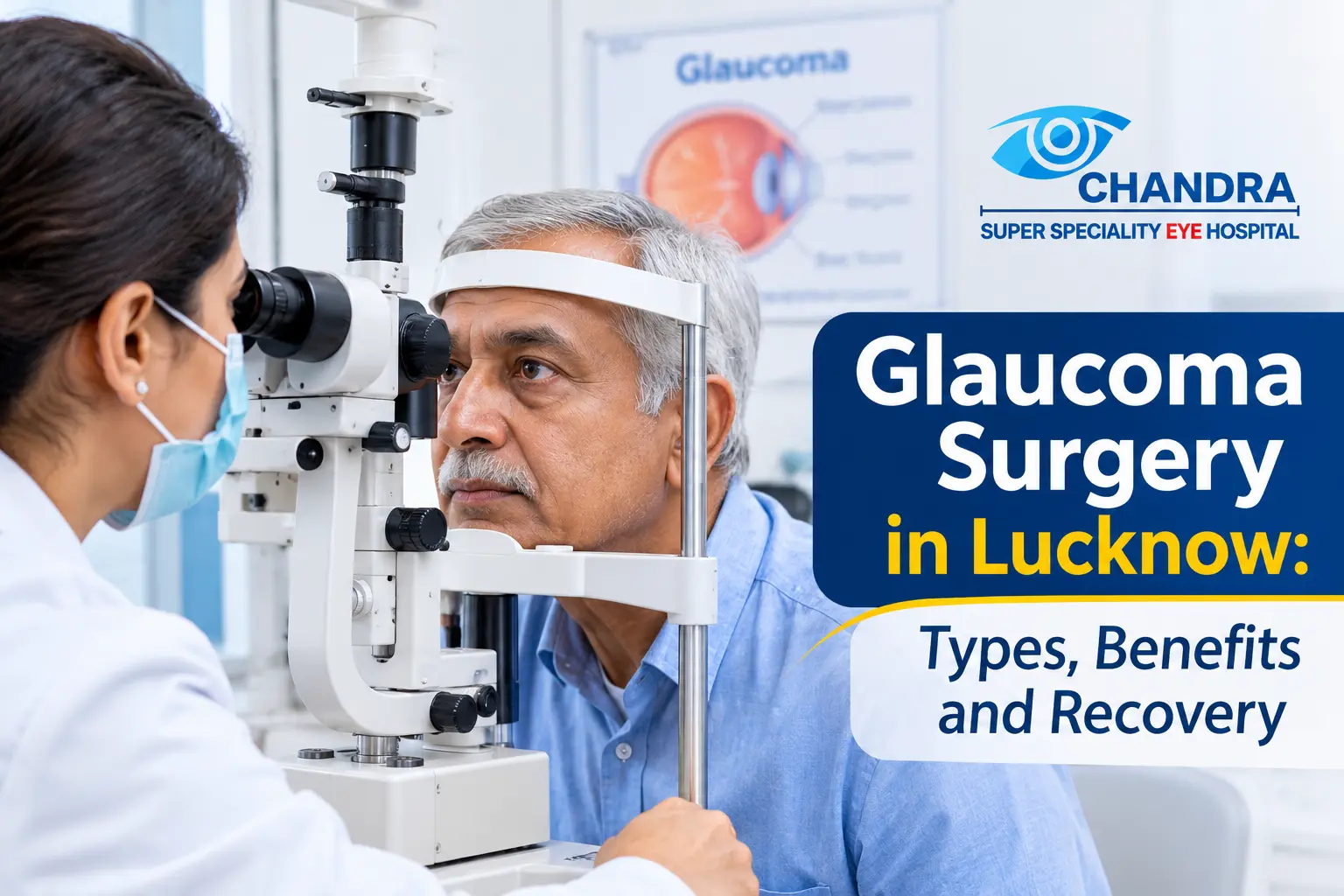
Glaucoma Surgery in Lucknow explained: types, benefits, recovery steps and
when to operate. Learn how Chandra Eye Hospital in Lucknow can help protect vision.
Glaucoma Surgery in Lucknow
Glaucoma rarely announces itself. There’s no pain, no redness, and vision seems fine until a
large part of it is already gone. That’s why so many people first hear the word from an eye
doctor, often after a routine check-up. If you or someone in your family has been told that eye
drops may not be enough, understanding Glaucoma Surgery in Lucknow can help you make
calmer, better decisions.
What Is Glaucoma and Why Does It Need Attention?
Glaucoma is a group of eye conditions that damage the optic nerve, the cable that carries
images from your eye to your brain. In most cases, the damage happens because pressure
inside the eye (intraocular pressure) stays too high.
The tricky part is that this damage is permanent. Any vision already lost cannot be brought
back. The goal of any glaucoma treatment is to stop things from getting worse, and the earlier
it begins, the more of your sight you keep.
Common risk factors include:
- Age above 40
- A family history of glaucoma
- Diabetes or high blood pressure
- Long-term steroid use
- High short-sightedness
- Past eye injuries
When the Glaucoma Treatment Not Enough With Drops?
Most people start with prescription drops. For many, that works for years. But a doctor may
suggest a glaucoma operation or laser procedure when:
- Eye pressure stays high despite regular medication
- The optic nerve keeps getting damaged on scans
- Side effects from drops become hard to tolerate
- Daily drops are difficult to follow consistently
- The type of glaucoma, such as angle-closure, needs a structural fix
Surgery isn’t a sign that you’ve failed at treatment. It’s often the more reliable route when
medication has reached its limit.
Types of Glaucoma Surgery Available
Your doctor will choose a procedure based on the type of glaucoma, how advanced it is, and
your overall eye health. Here are the main options.
1. Glaucoma Laser Surgery
Glaucoma laser surgery is usually the gentlest option and is done as an outpatient procedure.
- Selective Laser Trabeculoplasty (SLT): Improves the eye’s natural drainage in
open-angle glaucoma. - Laser Peripheral Iridotomy (LPI): Creates a tiny opening in the iris, commonly used for
angle-closure glaucoma. - Cyclophotocoagulation: Reduces the amount of fluid the eye produces, often reserved
for advanced cases.
2. Minimally Invasive Glaucoma Surgery (MIGS)
Minimally invasive glaucoma surgery uses microscopic implants or tiny incisions to improve
drainage. It’s known for a safer profile and quicker healing compared with older techniques
- Smaller incisions and less tissue disturbance
- Often combined with cataract surgery
- Faster recovery for most patients
- Best suited to early and moderate glaucoma
3. Trabeculectomy
This is the traditional glaucoma surgery. The surgeon creates a small drainage channel under
the upper eyelid so fluid can leave the eye and collect in a tiny cushion called a bleb.
- Effective at lowering pressure significantly
- Suitable for moderate to advanced glaucoma
- Needs careful aftercare and regular follow-ups
4. Glaucoma Drainage Devices (Tube Shunts)
A small tube is placed in the eye to carry fluid to a reservoir. These devices are often used when
earlier surgeries haven’t worked or when the eye has scarring.
- Helpful in complex or long-standing cases
- Provides a controlled drainage pathway
- Needs close monitoring in the early months
Benefits of Glaucoma Surgery
Many patients worry that surgery means a risky or difficult process. In reality, modern
techniques have made it far more predictable. The main advantages include:
- Lower eye pressure: The most important outcome, and the one that protects the optic
nerve. - Slower vision loss: It can halt or significantly slow further damage.
- Fewer eye drops: Many people reduce or stop their daily medication.
- Better consistency: You’re no longer relying entirely on remembering drops every day.
- Quality of life: Less worry about missed doses and medication side effects.
- One honest note: surgery can’t give back vision that’s already been lost. Its job is to
protect what you have, which is why timing matters.
What to Expect Before the Procedure
Before any glaucoma treatment plan is finalised, your ophthalmologist will carry out a detailed
assessment. This usually includes:
- Eye pressure measurement
- Optic nerve scan (OCT)
- Visual field testing
- Gonioscopy to check the drainage angle
- Corneal thickness measurement
These tests help the surgeon decide whether a laser, MIGS or a traditional operation is the right
fit for you.
Recovery After Glaucoma Surgery
Recovery varies depending on the procedure. Laser treatments often let you go back to normal
routines within a day or two, while a trabeculectomy or tube shunt takes longer to settle.
The first few days
- Mild irritation, watering or blurry vision is common
- Use prescribed antibiotic and anti-inflammatory drops exactly as directed
- Wear the protective eye shield, especially while sleeping
- Avoid rubbing or pressing on the eye
The first few weeks
- Avoid heavy lifting, strenuous exercise and bending for long periods
- Keep water, dust and soap away from the eye
- Skip eye makeup until your doctor says it’s safe
- Attend every follow-up so pressure can be checked and the drops adjusted
Warning signs to report immediately
- Sudden drop in vision
- Increasing pain or redness
- Swelling or discharge
- Persistent nausea or headache
Most patients feel steadier within four to six weeks, though complete healing and final pressure
control can take a few months.
How to Choose the Right Eye Hospital in Lucknow
Choosing where to have your surgery matters as much as choosing the procedure. When
comparing an Eye Hospital in Lucknow, look for:
- Experienced glaucoma specialists
- Modern diagnostic equipment, including OCT and visual field analysers
- Access to laser, MIGS and conventional surgical options
- Clear explanation of risks, costs and expected results
- Reliable follow-up care
Patients who want a dedicated eye-care setting often consider Chandra Eye Hospital in
Lucknow for consultation and treatment planning. Whichever hospital you choose, book an
evaluation, ask questions openly, and take your time before deciding.
Important Considerations
Glaucoma is a lifelong condition, but it doesn’t have to cost you your independence. With
regular check-ups, early detection and the right procedure, most people continue to see well for
many years.
If your doctor has mentioned Glaucoma Surgery in Lucknow, treat it as a protective step, not
a last resort. Get a thorough evaluation, understand your options and follow your aftercare
carefully.
FAQs –
- Is glaucoma surgery painful?
No. The eye is numbed with anaesthesia, so you feel little or no pain. Mild scratchiness
afterwards is normal and settles in a few days. - How long does glaucoma surgery take?
Laser procedures take about 10 to 15 minutes. A glaucoma operation like trabeculectomy
typically takes 30 to 45 minutes. - Can glaucoma surgery restore lost vision?
No. It protects the remaining vision by lowering eye pressure. Damage that has already happened can’t be reversed. - What is minimally invasive glaucoma surgery?
Minimally invasive glaucoma surgery uses tiny implants or incisions to improve fluid drainage. It
generally offers quicker recovery and fewer complications. - Is glaucoma laser surgery permanent?
Not always. Its effect can fade over several years, and some patients need repeat laser or
additional glaucoma treatment. - Will I still need eye drops after surgery?
Many patients use fewer drops, and some stop completely. Your doctor will decide based on
your eye pressure readings. - How long is the recovery after glaucoma surgery?
Most people return to light activity within a week. Full healing and stable pressure can take
several weeks to a few months. - What are the risks of glaucoma surgery?
Risks include infection, low or high pressure, bleeding and cataract progression. Serious
complications are uncommon with proper care. - When should I consult an eye hospital in Lucknow?
See a specialist if you’re over 40, have a family history, or notice any vision changes. Regular
screening helps catch glaucoma early. - How do I know which glaucoma treatment suits me?
Only a full eye examination can tell. Your doctor considers glaucoma type, severity and overall
eye health before recommending a procedure.