

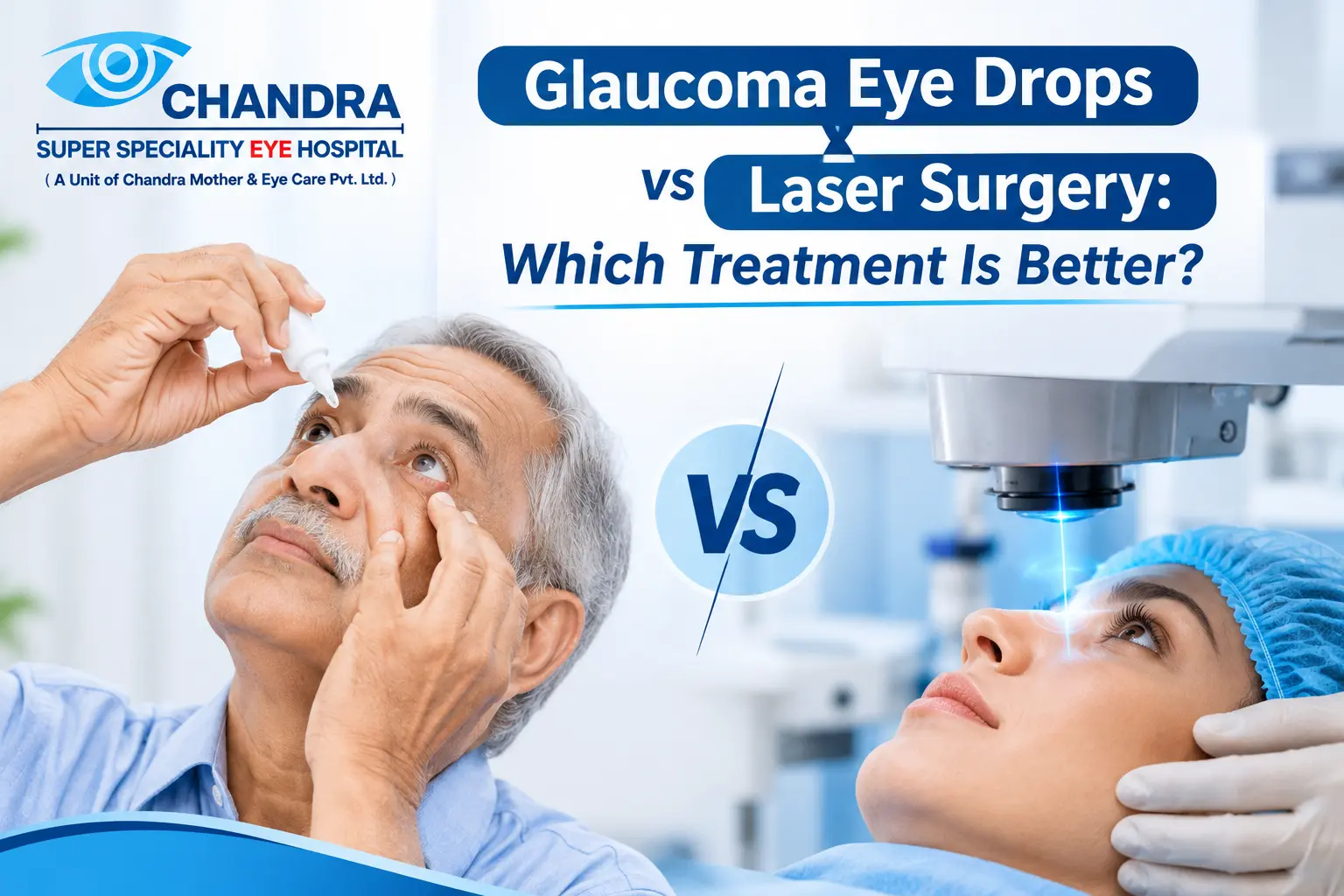
Glaucoma Eye Drops vs Laser Surgery: compare effectiveness, side effects, cost
and recovery to understand which glaucoma treatment may suit you best.
Glaucoma Eye Drops vs Laser Surgery
Hearing the word glaucoma is unsettling, and the next question is usually a practical one: do I
just use drops every day or should I go for a procedure?
There’s no single right answer for everyone. The honest way to look at Glaucoma Eye Drops
vs Laser Surgery is to understand how each one works, where it helps most, and where it falls
short.
Understanding Glaucoma in Simple Words
Glaucoma damages the optic nerve, which carries what you see from your eye to your brain. In
most cases, this happens because pressure inside the eye is too high. The problem is that it’s
usually painless, so many people lose peripheral vision slowly without noticing.
Damage from glaucoma can’t be reversed. So every glaucoma treatment has one main job:
bring eye pressure down and keep it there, so the vision you have today stays with you.
How Glaucoma Eye Drops Work
Glaucoma eye drops are the most common starting point. They work in one of two ways: some
reduce the amount of fluid your eye makes, and others help that fluid drain out more easily.
Advantages of eye drops:
- Non-invasive, with no procedure or recovery time
- Easy to start and easy to adjust if pressure doesn’t come down
- Many are affordable and widely available at any pharmacy
- Different drops can be combined for tougher cases
Limitations of eye drops:
- You need to use them every single day, often for life
- Missing doses lets the pressure creep up unnoticed
- Side effects can include redness, stinging, dryness and blurred vision
- Long-term use adds up in cost
- Putting drops in correctly is harder than it sounds, especially for older adults
The biggest weakness of drops isn’t the medicine itself. It’s the routine. Studies and everyday
clinic experience both show that many people struggle to use them exactly as prescribed over
many years.
How Glaucoma Laser Surgery Works
Glaucoma laser surgery uses a focused beam of light to improve how fluid leaves the eye.
The most common type for open-angle glaucoma is Selective Laser Trabeculoplasty (SLT). For
angle-closure glaucoma, doctors often use laser peripheral iridotomy, which creates a tiny
opening in the iris.
The procedure is done in a clinic, takes only a few minutes per eye, and doesn’t require an
overnight stay.
Advantages of laser surgery
- Works on the eye’s drainage system, not just through daily medicine
- Often reduces the number of drops you need
- Quick, usually painless, and done as an outpatient
- Recovery is short, and most people resume normal routines in a day or two
- No daily routine to remember for the laser effect itself
Limitations of laser surgery
- The effect can wear off over several years and the laser may need repeating
- Not every patient responds equally well
- Some people still need drops afterwards
- Mild irritation, light sensitivity or a temporary pressure spike can occur
Glaucoma Eye Drops vs Laser Surgery: Side-by-side View
Here’s a plain comparison to help you think it through:
- Convenience: Laser wins. A short visit versus a lifetime of daily drops.
- Upfront cost: Drops are cheaper to begin with.
- Long-term cost: Laser can work out lower for many people, since you may need fewer
drops. - Side effects: Drops cause more ongoing surface irritation. Laser side effects are usually
short-lived. - Reliability: Laser doesn’t depend on you remembering. Drops do.
- Flexibility: Drops are easier to change or stop if something isn’t working.
- Duration of effect: Drops work as long as you use them. Laser results may fade and
need a repeat.
The Dry Eye Connection
Many people on long-term drops notice their eyes feel gritty, tired or burning. Some glaucoma
medications contain preservatives that can irritate the surface of the eye, and this can make
existing dryness worse.
If you already need dry eye treatment, tell your eye doctor. Preservative-free options exist,
and in some cases, moving to laser can reduce how many drops you rely on. That alone can
make everyday life more comfortable.
Which Treatment Is Better for You?
Neither option is automatically better. The right choice depends on your situation.
Drops may be a good fit if:
- Your glaucoma is mild or just diagnosed
- You’re comfortable with a daily routine and can stay consistent
- You don’t have major side effects from the medication
- You prefer a non-procedure approach to start with
Laser surgery may be worth considering if:
- You forget drops or find them hard to put in
- Drops cause redness, dryness or other side effects
- Your pressure stays high even with medication
- You have angle-closure glaucoma, where laser is often a core part of treatment
- You’d like to reduce your long-term dependence on medicines
Many people end up with a mix, using laser to lower pressure and a drop or two to keep it
steady. Your eye doctor will look at your optic nerve scans, visual field tests and pressure
readings before suggesting a path.
When Is Surgery Beyond Laser Needed?
Sometimes neither drops nor laser keep pressure low enough. In advanced or stubborn cases,
a glaucoma surgery such as trabeculectomy, a drainage implant or a minimally invasive
procedure may be recommended. This is where choosing a reliable glaucoma surgery
hospital matters, because these procedures need an experienced team and careful follow-up.
Choosing the Right Eye Hospital for Your Care
Whichever route you take, glaucoma needs lifelong monitoring. When you compare an eye
hospital, look for these things:
- Specialists with real experience in glaucoma
- Proper diagnostic equipment, such as OCT and visual field testing
- Access to drops, laser and surgical options under one roof
- Clear, unhurried explanations of your choices
- Good eye care service after the procedure, including regular check-ups
A hospital that answers your questions patiently is usually one worth trusting. Complete eye
treatment isn’t only about the surgery or prescription. It’s also about how well they follow your
progress over the years.
Simple Tips for Better Eye Care With Glaucoma
- Never stop or skip drops without asking your doctor
- Set phone reminders so doses don’t slip
- Wash your hands before using drops, and don’t touch the bottle tip to your eye
- Keep every follow-up appointment, even if your vision feels fine
- Get family members screened, especially siblings and parents
- Report sudden vision changes, eye pain or severe headaches immediately
Important Considerations
The debate around Glaucoma Eye Drops vs Laser Surgery isn’t about picking a winner. It’s
about finding what protects your vision in a way you can realistically stick with. Drops are a
dependable first step for many people, while lasers offer a convenient alternative or partner for
others.
Talk openly with your eye doctor, ask about the pros and cons for your specific case, and don’t
delay your check-ups. Catching glaucoma early and treating it consistently is what keeps your
sight safe for years to come.
FAQs –
- Which is better, glaucoma eye drops or laser surgery?
It depends on your eyes and lifestyle. Drops suit many early cases, while laser helps people
who struggle with daily medication. - Can laser surgery completely replace glaucoma eye drops?
Sometimes, but not always. Many patients can reduce their drops after laser, while others still
need one or two to keep pressure stable. - Is glaucoma laser surgery painful?
No. Numbing drops are used, and most people feel only mild pressure or brightness. The
procedure takes just a few minutes. - How long does the effect of laser surgery last?
It varies by person, often several years. If pressure rises again, your doctor may repeat the laser
or add medication. - What happens if I stop using glaucoma eye drops?
Eye pressure can rise quickly and silently, harming the optic nerve. Always speak to your doctor before changing or stopping any medicine. - Do glaucoma drops cause dry eyes?
They can, especially drops with preservatives. Tell your doctor if you notice dryness, as
preservative-free options or dry eye treatment may help. - Is laser surgery safe for everyone with glaucoma?
Not every patient is a candidate. Your doctor checks the eye’s drainage angle and overall health
before recommending laser treatment. - How soon can I return to normal life after laser?
Most people resume daily activities within a day or two. You may have mild irritation, and a
follow-up visit checks your pressure. - Which costs more over time: drops or laser?
Drops are cheaper at first but add up over the years. Laser costs more upfront and can lower
long-term spending if it cuts your medication. - When should I see an eye doctor about glaucoma?
Go if you’re over 40, have a family history or notice vision changes. Regular check-ups catch
glaucoma before permanent damage occurs.