

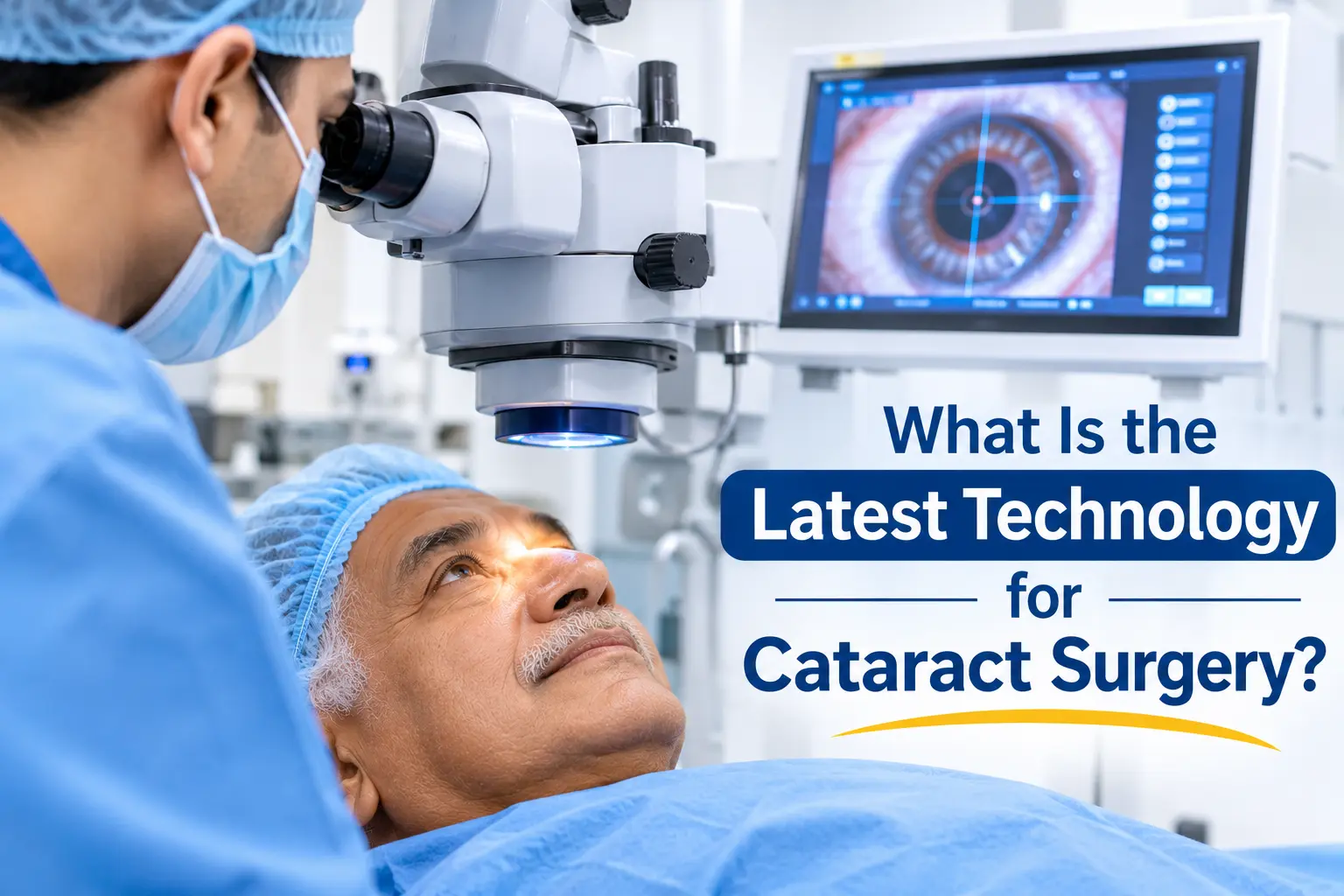
Cataract surgery is one of the most common and successful procedures in the world, and the latest cataract surgery technology is making it faster, gentler and more precise. Patients now expect shorter procedures, quicker recovery and sharper vision, and modern technology for cataract surgery delivers on all three.
This guide covers the newest platforms, including UNITY 4D Cataract Surgery, the main types of cataract surgery, and the precautions after cataract surgery. It also explains how to choose the right eye hospital and eye doctor.
Key Highlights –
- UNITY 4D is among the newest phaco technologies in cataract eye surgery
- Modern cataract operations typically take only minutes
- Premium lenses can reduce dependence on glasses
- Good aftercare matters as much as the technology
What Is a Cataract?
A cataract is a clouding of the eye’s natural lens. It causes blurred vision, glare, faded colours and trouble driving at night. Cataracts cannot be reversed with drops or glasses, so cataract surgery is the only definitive eye treatment.
An eye doctor (ophthalmologist) removes the cloudy lens and replaces it with a clear artificial intraocular lens (IOL). This is called a cataract eye surgery or eye cataract operation.
What Makes UNITY 4D Different?
UNITY 4D uses advanced ultrasound tip movement. It uses multi-directional tip motion to create a repeatable cutting pattern completed in about 0.1 seconds. The goal is to break up the cataract efficiently while limiting the energy delivered inside the eye.
According to the manufacturer, UNITY 4D Phaco delivers up to twice-as-fast nucleus removal and 41% less energy into the eye. These figures come largely from bench testing, so real-world results can vary by case.
Independent research points the same way. A laboratory study found better efficiency and lower cumulative dissipated energy with 4D phaco compared with torsional phaco.
Intelligent Fluidics
The platform’s fluid-control system is designed to keep pressure inside the eye stable. Surgeons describe it as allowing surgery at a more physiologic eye pressure while keeping the front chamber of the eye stable. Stable pressure can mean a more comfortable surgery and a calmer eye afterward.
Highlighted benefits of UNITY 4D:
- Efficient lens removal
- Lower ultrasound energy
- More stable eye pressure during surgery
- Potentially gentler eye care experience
Note: Hospitals such as InnovEye and others may offer different systems, so ask your eye hospital which platform they use and why.
Types of Cataract Surgery
Knowing the types of cataract surgery helps you discuss options with your eye doctor.
1. Phacoemulsification (Phaco)
The most common cataract surgery procedure. A 2–3 mm incision is made, ultrasound breaks up the cloudy lens, and the pieces are suctioned out. A foldable IOL is then placed. UNITY 4D belongs to this category.
2. Femtosecond Laser-Assisted Cataract Surgery (FLACS)
A laser handles some steps, such as the incision and lens softening. It is often offered as a premium option.
3. Manual Small Incision Cataract Surgery (MSICS)
The lens is removed in one piece through a slightly larger self-sealing incision. It is widely used for very hard cataracts and in high-volume settings.
4. Extracapsular Cataract Extraction (ECCE)
An older technique with a larger incision. It is now used only in special situations.
Premium Lens Options in Modern Cataract Operations
The technology that places the lens is only half the story. The IOL you choose shapes your vision afterward:
- Monofocal lenses give clear vision at one distance, usually far.
- Toric lenses correct astigmatism.
- Extended depth of focus (EDOF) lenses give a continuous range of vision.
- Multifocal lenses cover near, intermediate and far distances.
Your eye doctor will recommend a lens based on your lifestyle, eye health and budget.
Cataract Surgery Procedure: Step by Step
A typical cataract operation is a day-care procedure:
- Pre-operative checks: eye measurements, lens power calculation and a general health review.
- Anaesthesia: numbing drops or a local injection, so you stay comfortable.
- Incision: a tiny, self-sealing cut in the cornea.
- Phaco removal: the cloudy lens is broken up and removed using a platform like UNITY 4D.
- IOL implantation: the artificial lens is placed in the capsule.
- Recovery: you rest briefly and go home the same day.
Most eye cataract operations take about 10 to 20 minutes per eye. Your surgeon will give exact timing for your case.
Precautions After Cataract Surgery
Even with the latest cataract surgery technology, aftercare decides how well you heal. Follow these precautions after cataract surgery:
- Use prescribed antibiotic and anti-inflammatory drops exactly on schedule
- Wear the protective shield while sleeping, as advised
- Avoid rubbing or pressing the eye
- Keep water, soap and dust out of the eye for the period your doctor specifies
- Avoid heavy lifting, strenuous exercise and swimming until cleared
- Wear sunglasses outdoors
- Postpone eye makeup until your doctor approves
- Attend every follow-up visit
Seek urgent help if you notice severe pain, sudden vision loss, increasing redness or flashes of light.
Dry Eye Treatment and Cataract Surgery
Dry eye is common before and after surgery. Untreated dry eyes can affect the accuracy of pre-surgery measurements and slow comfort during recovery.
A good eye care service will check the ocular surface first. Dry eye treatment may include lubricating drops, warm compresses, treatment of eyelid inflammation or other therapies your doctor recommends. Treating a dry eye early can improve both surgical planning and the final result.
How to Choose an Eye Hospital and Eye Doctor
Technology matters, but so do the people using it. When choosing an eye hospital or eye care service, consider:
- Surgeon experience: how many cataract surgeries they perform
- Technology: whether they offer modern platforms like UNITY 4D
- Lens choices: a full range of IOL options
- Safety standards: sterilisation, infection control and emergency readiness
- Follow-up care: clear aftercare and accessible support
- Transparent pricing: a written estimate that includes lens and follow-ups
Ask questions freely. A trustworthy eye doctor will explain why they recommend a particular cataract surgery procedure and lens for you.
Important Consideration
The latest cataract surgery technology has made vision correction safer and more comfortable than ever. Platforms like UNITY 4D, modern fluid control, laser assistance and premium lenses give patients more choice. Still, the best results come from a skilled eye doctor, the right lens for your needs, and disciplined aftercare.
If you have blurry vision, glare or difficulty with daily tasks, book an eye check-up at a trusted eye hospital. Early evaluation helps you choose the right eye treatment at the right time.
FAQs –
1. What is the latest technology for cataract surgery?
Advanced phaco platforms like UNITY 4D, laser-assisted techniques and premium IOLs are leading the field. The best option depends on your eyes.
2. What is UNITY 4D Cataract Surgery?
It is a phaco technology that uses multi-directional tip movement to remove the cataract efficiently. It aims to use less energy inside the eye.
3. Is cataract surgery painful?
No. Numbing drops or local anaesthesia keep you comfortable. You may feel slight pressure only.
4. How long does a cataract operation take?
Usually 10 to 20 minutes per eye. You normally go home the same day.
5. What are the main types of cataract surgery?
Phacoemulsification, femtosecond laser-assisted surgery, MSICS and ECCE. Your eye doctor will advise the right one.
6. What are the key precautions after cataract surgery?
Use drops on time, avoid rubbing the eye, protect it from water and dust, and skip strenuous activity until cleared.
7. When will I see clearly after surgery?
Many people notice improvement within a day or two. Full stabilisation can take a few weeks.
8. Can dry eye affect cataract surgery?
Yes. Dry eye can affect measurements and comfort, so dry eye treatment before and after surgery is often recommended.
9. Do I need glasses after cataract surgery?
It depends on the lens. Monofocal lenses usually need reading glasses, while multifocal or EDOF lenses can reduce glasses dependence.
10. How do I choose the best eye hospital for cataract surgery?
Check surgeon experience, available technology, lens options, safety standards and follow-up support. Ask for a clear written estimate.