

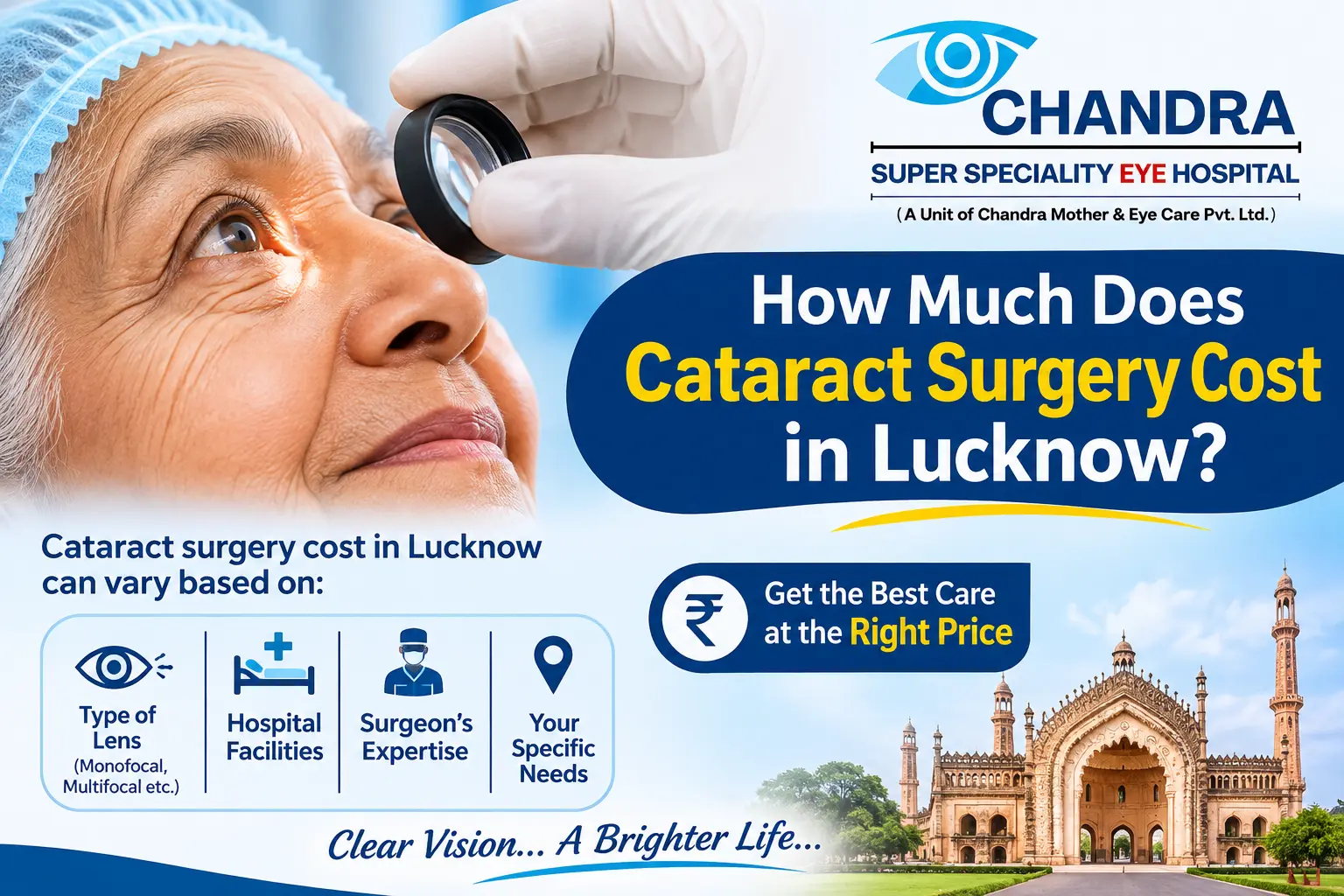
Know the Cataract Surgery Cost in Lucknow, types of lenses, factors, and tips to choose the best eye hospital for safe vision.
Blurry vision, glare at night, and faded colors are often the first signs of a cataract. If you or a family member has been told to get surgery, the first question is usually: Cataract Surgery Cost in Lucknow. Costs vary with the lens, the technology, and the hospital, so it helps to understand what you are paying for.
This guide explains the Cataract Surgery Cost in Lucknow, what affects the price, and how to choose the right eye hospital and eye doctor.
What Is Cataract Surgery?
Cataract surgery is a quick procedure that removes the cloudy natural lens of the eye and replaces it with a clear artificial lens, called an intraocular lens (IOL). It is one of the safest and most common surgeries in the world, and Cataract Surgery in India has a success rate above 95% when done by an experienced surgeon.
Most patients go home the same day and see better within a few days.
Cataract Surgery Cost in Lucknow: Approximate Price Range
The Cataract Surgery Cost in Lucknow is generally lower than in metro cities like Delhi or Mumbai, without compromising on quality. Approximate cost per eye:
– Government or charitable hospitals: ₹0 – ₹10,000, with free or subsidised surgery for eligible patients
– Standard phaco surgery with monofocal lens: ₹10,000 – ₹30,000*
– Toric lens (for astigmatism): ₹35,000 – ₹70,000*
– Multifocal or trifocal lens: ₹45,000 – ₹1,00,000*
– Femtosecond laser-assisted surgery: ₹60,000 – ₹1,20,000*
These are indicative figures only. Actual prices depend on the hospital, lens brand, and your eye condition. Always get a written estimate after examination.
Factors That Affect Cataract Surgery Cost
Understanding these factors helps you plan your budget.
1. Type of Intraocular Lens (IOL)
– Monofocal lenses give clear vision at one distance, usually far, and are the most affordable.
– Multifocal and trifocal lenses reduce dependence on glasses for near and far vision, and cost more.
– Toric lenses correct astigmatism along with the cataract.
2. Surgical Technique
– Phacoemulsification (phaco) is the standard, stitchless method.
– Laser-assisted surgery is more advanced and costs more.
– Manual small-incision surgery (MSICS) is used for very hard cataracts and is usually cheaper.
3. Hospital Category
A Superspecialty Eye Hospital with advanced diagnostics, modular operation theatres, and high-end equipment generally charges more than a small clinic. Many patients find the extra safety and precision worth it.
4. Surgeon’s Experience
An experienced Eye doctor or senior cataract surgeon may charge higher consultation and surgical fees. Experience lowers the risk of complications.
5. Room Type and Hospital Stay
Day-care surgery costs less. A private room or extended stay raises the bill.
6. Pre- and Post-Surgery Care
Check whether the quoted package includes eye tests, medicines, and follow-up visits.
What Is Usually Included in the Package?
A good Cataract Treatment Hospital will give a clear package covering:
– Initial eye examination and diagnostic tests (biometry, OCT, etc.)
– Surgeon and anaesthetist fees
– Operation theatre charges
– Intraocular lens
– Post-operative medicines and eye drops
– Follow-up consultations
Ask about hidden charges before you book.
Does Insurance Cover Cataract Surgery?
Yes, in most cases. Many health insurance policies in India cover Cataract Surgery after a short waiting period. Government schemes such as Ayushman Bharat may also help eligible families. Premium lenses and laser upgrades are often only partly covered, so check your policy and talk to the hospital’s insurance desk.
Why Choose a Superspecialty Eye Hospital?
A Superspecialty Eye Hospital offers complete Eye Care Services under one roof, including cataract, glaucoma, retina, cornea, and pediatric eye care. Benefits include:
– Advanced diagnostic and surgical technology
– Experienced teams of specialist surgeons
– Better handling of complicated cases, such as diabetic patients or very dense cataracts
– Strict sterilisation and infection control
– Complete Eye Treatment and follow-up in one place
How to Choose the Right Eye Hospital in Lucknow
Do not decide on price alone. Check these points:
1. Surgeon qualifications: Look for an MS/DNB ophthalmologist with cataract experience.
2. Technology: Ask whether the hospital offers phaco, laser, and premium IOL options.
3. Transparent pricing: The estimate should be clear and in writing.
4. Patient reviews: Check Google reviews and ask people you know.
5. Hygiene: The facility should be clean and follow proper protocols.
6. Follow-up care: Good post-surgery support is part of a good outcome.
Symptoms That Mean You Should See an Eye Doctor
Visit a qualified Eye Doctor if you notice:
– Cloudy or foggy vision
– Difficulty driving at night due to glare
– Colors that look faded or yellowish
– Frequent changes in glasses power
– Double vision in one eye
Early diagnosis helps you plan treatment and budget calmly.
Recovery After Cataract Surgery
Recovery is usually quick:
– Mild irritation or watering for a day or two
– Use prescribed eye drops on schedule
– Avoid rubbing the eye and keep water and dust out
– Avoid heavy lifting and strenuous activity for a week or two
– Attend all follow-up visits
Most people return to normal routines within a few days.
The Cataract Surgery Cost in Lucknow is reasonable compared with many other cities, and quality Eye Care is easily available. Whether you choose a basic monofocal lens or a premium option, the goal is clear vision and a better quality of life. Compare options, ask questions, and choose an Eye Hospital that combines expertise, technology, and transparency.
If you have symptoms, please do not delay. Book a consultation with a trusted Eye Care Service provider and get a personalized estimate.
Frequently Asked Questions
1. What is the average cataract surgery cost in Lucknow?
Standard phaco surgery with a monofocal lens usually costs ₹10,000 to ₹30,000 per eye. Premium lenses and laser procedures cost more.
2. Is cataract surgery painful?
No. The eye is numbed with drops or local anaesthesia, so you may feel only slight pressure.
3. How long does the surgery take?
Usually 10 to 20 minutes per eye. You can often go home the same day.
4. Why does cataract surgery cost differ between hospitals?
Prices depend on the lens type, technology, surgeon experience, hospital facilities, and what the package includes.
5. Is laser cataract surgery better than phaco?
Laser-assisted surgery offers extra precision in some cases, but standard phaco also gives excellent results. Your surgeon will recommend what suits your eye.
6. Does insurance cover cataract surgery in India?
Most policies cover it after the waiting period, though premium lenses may only be partly covered. Confirm with your insurer and the hospital.
7. How soon can I resume normal activities?
Light activities usually resume within 2 to 3 days, and full activity within 2 to 4 weeks with your doctor’s approval.
8. Will I need glasses after surgery?
With monofocal lenses, you may need glasses for reading or near work. Multifocal or trifocal lenses reduce glasses dependence.
9. Can cataracts come back after surgery?
The cataract itself does not return, but some people develop posterior capsule opacification, which is treated with a quick laser procedure.
10. How do I choose the best cataract treatment hospital in Lucknow?
Check the surgeon’s qualifications, technology, hospital hygiene, transparent pricing, patient reviews, and follow-up care.